
Syria Removed From U.S. Terrorism List: A State’s Rebirth or a New Geopolitical Game?
The United States has removed Syria from its terrorism list after 47 years, opening a new chapter of recognition, reconstruction, and geopolitical competition.
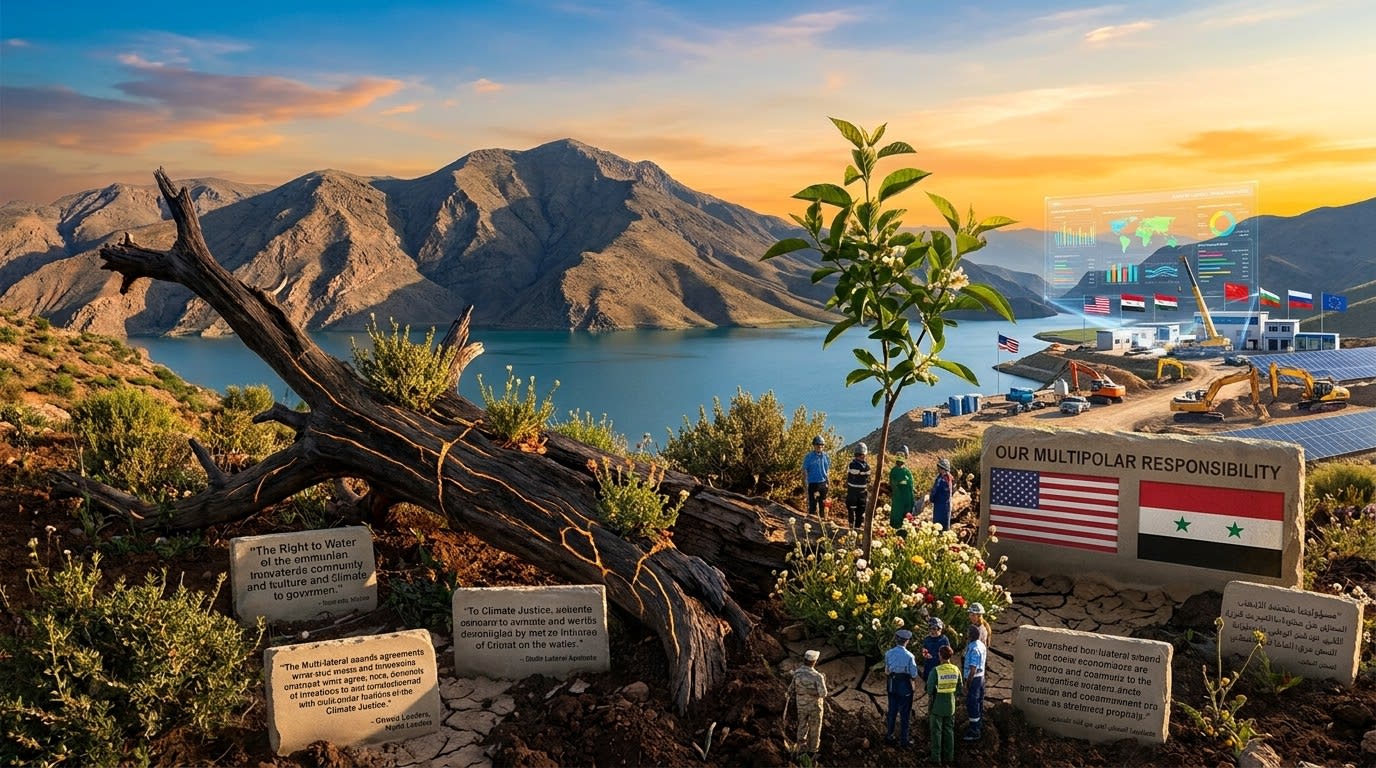
The United States has officially removed Syria from its list of State Sponsors of Terrorism, ending a designation that had remained in place since 1979. The decision took effect on August 24, 2026, after President Donald Trump formally notified Congress in July and the mandatory 45-day congressional review period expired. Washington also revoked the global terrorist designation of Hayat Tahrir al-Sham (HTS), formerly known as the al-Nusra Front, whose former leader Ahmed al-Sharaa now serves as Syria’s president. <Cite refs={["turn0news0","turn0news1"]}/>
More than a diplomatic announcement, this marks a significant shift in Syria’s international standing. After decades of isolation, sanctions, and civil war, the move opens the possibility of economic recovery while also reflecting changing geopolitical priorities in the Middle East.
The End of a 47-Year Designation
Syria was added to the U.S. terrorism list in 1979 during the rule of Hafez al-Assad over allegations of supporting militant groups. The designation remained throughout Bashar al-Assad’s presidency and was reinforced by additional sanctions, including the Syria Accountability and Lebanese Sovereignty Restoration Act of 2003 and executive actions introduced in 2004.
Following the outbreak of anti-government protests and civil war in 2011, the United States imposed broader sanctions that isolated Syria from much of the global financial system for more than a decade.
The political landscape changed dramatically in December 2024 when a rebel coalition led by Ahmed al-Sharaa overthrew Bashar al-Assad’s government. Since then, relations between Syria and Western governments have gradually improved. In June 2026, President Trump lifted most U.S. sanctions through an executive order before moving to remove Syria from the terrorism list. <Cite refs={["turn0news0","turn0news1"]}/>
U.S. Secretary of State Marco Rubio said the decision recognizes the Syrian government’s “positive steps and commitments” to distance the country from international terrorism.
Recognition, Legitimacy and Reconstruction
The removal carries major economic implications. For years, the terrorism designation restricted foreign investment, banking transactions, international financial assistance, and many forms of trade with Syria.
Syrian Central Bank Governor Safwat Raslan described the decision as a historic return to Syria’s “normal place” in the global financial system. Foreign Minister Asaad al-Shibani called it the removal of the last major obstacle to reconnecting Syria with global finance and investment. <Cite refs={["turn0news0","turn0news1"]}/>
From a sociological perspective, such a designation is not merely an economic sanction. It also represents symbolic exclusion, denying a state recognition as a legitimate member of the international community. Delisting therefore strengthens the international legitimacy of Ahmed al-Sharaa’s government while potentially reinforcing its domestic political position.
After 14 years of civil war, Syria’s infrastructure, healthcare, education system, and public institutions require enormous investment, technology, and expertise. Analysts believe the easing of sanctions could encourage international companies to participate in reconstruction efforts. <Cite refs={["turn0news0","turn0news1"]}/>
A Strategic U.S. Calculation
The decision is also widely viewed as a strategic geopolitical move.
Analysts cited by Al Jazeera argue that Washington aims to pull Syria away from the influence of Iran and Russia while supporting its reintegration into regional and global politics. The move also reflects recognition of Syria’s cooperation against the Islamic State under the new government.
This raises a broader question about legitimacy in international relations. A figure once designated a terrorist has become the internationally recognized president of Syria. The shift illustrates how labels such as “terrorism” can evolve alongside changing geopolitical interests rather than remaining fixed moral judgments.
Opportunities and Unanswered Questions
Despite renewed international recognition, Syria still faces major internal challenges.
Armed groups remain active in different parts of the country.
Sectarian and ethnic divisions continue to threaten stability.
Questions over governance, justice, accountability, and minority protection remain unresolved.
Greater reliance on Western investment could create a new form of political and economic dependency.
Regional reactions from Iran, Russia, and other Middle Eastern powers could also reshape the balance of power in the region.
From a sociological perspective, de-stigmatization is never completed by a legal declaration alone. Removing Syria from the terrorism list is an important symbolic beginning, but lasting transformation will depend on rebuilding institutions, restoring social trust, and creating an inclusive political order after years of conflict.
How did this land?
Related reporting
Iran–US Standoff Deepens as Strait of Hormuz Shipping Nearly Grinds to a Halt
Stalled diplomacy and attacks on tankers are disrupting Hormuz traffic, keeping oil markets on edge and raising fears of wider regional escalation.

Israel expands ground assault in Gaza City as humanitarian crisis deepens
Israel’s expanded Gaza City operation is driving displacement as humanitarian access, shelter and essential services remain severely strained.

Yemen conflict displaces more than 100,000 as Red Sea risks grow
Renewed fighting in Yemen has displaced more than 100,000 people and pushed thousands toward Djibouti as Red Sea security deteriorates.

Gaza at a Breaking Point, Civilians Caught Between War and Diplomacy
The UN says Gaza's humanitarian crisis is worsening as ceasefire diplomacy struggles to translate into relief for civilians.