
Arctic Glacier Melt Speeds Up, Raising Fresh Alarms Over Sea Level Rise
Rapid warming and accelerating ice loss in the Arctic are driving global sea levels higher, threatening coastal cities and vulnerable regions worldwide.
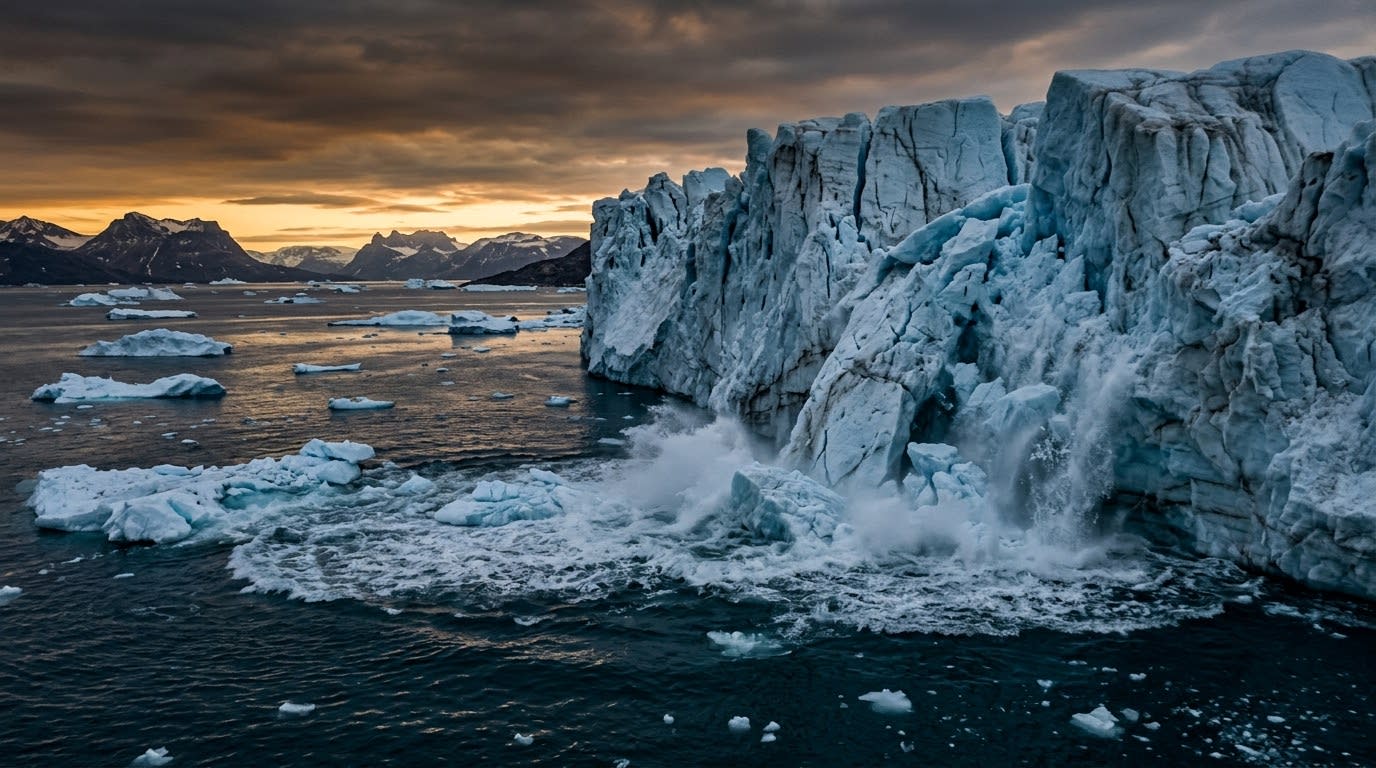
Arctic Warming Reshapes the Global Climate
The Arctic is warming faster than any other region on Earth, with scientists warning that the accelerating loss of glaciers and ice sheets has entered a critical phase. New research shows that ice melt across Greenland, the Arctic Ocean, and surrounding mountain glaciers is speeding up, raising fresh concerns about global sea-level rise and its long-term consequences for millions of people living in coastal communities.
The region has warmed nearly four times faster than the global average over recent decades due to a phenomenon known as Arctic amplification. Rising temperatures are causing glaciers to shrink, sea ice to disappear earlier each summer, and massive ice sheets to lose billions of tonnes of ice every year. Scientists explain that this rapid warming is altering weather patterns far beyond the Arctic, influencing heatwaves, storms, and rainfall across the Northern Hemisphere.
The Greenland Ice Sheet remains one of the largest concerns for climate researchers. It contains enough frozen water to raise global sea levels by approximately seven metres if it were to melt completely. While such a complete melt would take centuries, scientists emphasize that the current rate of melting is already contributing significantly to rising sea levels worldwide.
Rising Seas Threaten Vulnerable Coastal Regions
Accelerating glacier melt means global sea levels are rising at an increasing pace. Higher sea levels elevate the risk of severe coastal flooding, shoreline erosion, and saltwater intrusion into essential freshwater supplies. Low-lying coastal areas and island nations are among the most vulnerable to these environmental changes.
Scientists warn that glacier melt in the Arctic is no longer a distant environmental issue—it is becoming a global coastal security challenge.
The consequences of Arctic ice loss extend far beyond the polar regions. Major cities across Asia, Europe, and North America are already spending billions of dollars on flood protection and climate adaptation as rising waters threaten residential areas, ports, and critical infrastructure. Densely populated coastal nations, including Bangladesh, face increasing risks from stronger storm surges and permanent land loss in low-lying coastal districts.
Threat of Irreversible Climate Tipping Points
Researchers express growing concern that parts of the Arctic may be approaching irreversible climate tipping points. As bright white ice melts away, darker ocean waters absorb more solar heat, creating a feedback loop that further accelerates regional warming and ice loss.
This continuous warming disrupts ecosystems throughout the Arctic region. It threatens polar wildlife, marine fisheries, and Indigenous communities whose traditional livelihoods depend on stable ice conditions. Scientists stress that reducing global greenhouse gas emissions is the most effective way to slow long-term ice loss, as local adaptation measures alone cannot halt the warming already underway.
A Growing Global Security Challenge
The latest scientific warnings reinforce a clear consensus among climate experts: environmental changes in the Arctic will directly shape the future of the world's coastlines. Every additional fraction of a degree of warming increases the likelihood of faster glacier melt and higher global sea levels.
For governments around the world, the findings underscore an urgent need for action. Protecting vulnerable coastal communities requires stronger climate adaptation strategies, improved disaster preparedness, and sustained international efforts to cut emissions. The Arctic is no longer a remote frontier of climate change, but rather one of the clearest indicators of how rapidly the planet is transforming.
How did this land?
Related reporting

June 2026 Was the World’s Second-Warmest June on Record
Global temperatures reached 16.54°C in June, while oceans recorded their warmest June and western Europe suffered record heat.

Super El Niño strengthens as scientists warn of wider climate impacts
Scientists warn that a strengthening Super El Niño and a positive Indian Ocean Dipole could reshape weather, agriculture and water risks across South Asia.

Nepal Flood Disaster Enters a More Dangerous Phase as Regional Risks Grow
Nepal’s Himalayan flood disaster is worsening as casualties rise, rescue efforts continue and climate-linked hazards threaten the wider region.

Europe’s Heatwave Dries Rivers, Fuels Wildfires and Strains the Economy
Repeated heatwaves and drought are pushing European rivers to record lows while worsening wildfires and pressuring farming, energy and transport.