
When everyone becomes an expert; Bangladesh’s social media dilemma
Social media has widened public participation in Bangladesh, but unchecked certainty is increasingly blurring the line between opinion and expertise.

13August,2026.
Dhaka
Bangladesh’s expanding social-media culture is changing how people discuss economics, politics, science, medicine and international affairs, but the rapid spread of confident opinions without adequate knowledge is raising questions about the quality of public debate. On Facebook and other platforms, users can now publish interpretations of complex issues to large audiences within minutes, often without the editorial or professional scrutiny traditionally associated with public information.
The issue is not that people hold opinions. Public disagreement is essential to a democratic society. The concern is that opinion is increasingly presented as expertise, sometimes without even a basic understanding of the subject under discussion.
Everyone can speak, but expertise remains specialised
Social media has fundamentally altered the relationship between information and authority. Traditional media generally relied on reporters, editors, researchers and institutional processes before information reached a broad audience. Social platforms have removed much of that structure, allowing almost anyone to publish an interpretation of an economic policy, international conflict, scientific study or historical event.
That democratisation of publication has expanded participation. But the ability to publish does not automatically confer expertise.
A person does not become an economist simply by discussing inflation. Reading several posts about international relations does not make someone a geopolitical analyst, just as watching medical videos does not qualify someone to diagnose illness.
Yet online discussions often treat these distinctions as secondary to confidence.
Confidence can overpower competence
Complex subjects usually require evidence, context and an understanding of competing explanations. Social-media discussions, by contrast, often reward certainty, simplicity and emotional intensity.
An expert may explain that a question has several plausible interpretations. A confident commenter may reduce it to one explanation and declare the matter settled. The latter can be easier to understand, share and debate.
«“Little knowledge, strong certainty, immediate judgement.”»
This pattern does not necessarily mean Bangladeshis are becoming less knowledgeable. Rather, social-media architecture can make certainty highly visible while making caution and qualification less attractive.
The problem becomes particularly apparent when users comment on subjects outside their professional or academic background. Economic policies attract amateur monetary analysis; wars generate definitive military assessments; and scientific research is sometimes challenged through personal experience rather than evidence.
The distinction between having a view and having grounds for that view can consequently become blurred.
When disagreement becomes personal
Online disagreement can also shift from claims to identities. Instead of examining an argument, users may question the political allegiance, morality or credibility of the person presenting it.
Research on Bangla-language social-media discourse has identified patterns of toxicity, cyberbullying and moral policing, showing how digital disagreement can move beyond substantive discussion. In such circumstances, a comment section stops functioning only as a place for evaluating ideas and becomes a space for judging individuals.
Experts face a further disadvantage because professional knowledge is usually slower to communicate. It requires evidence, reading and qualification, while social media operates through rapid reactions.
«“The available evidence does not allow us to reach a definitive conclusion.”»
A viral commenter can instead offer an absolute claim such as “Everyone knows the truth.” The second statement may be weaker intellectually but stronger rhetorically.
Because social platforms are built around engagement, content that generates anger, amusement or strong agreement can travel farther than careful explanations. Popularity can therefore create an appearance of authority.
From digital literacy to epistemic literacy
The phrase “I did my research” also illustrates the problem. Browsing posts that support an existing belief is not equivalent to research, which requires assessing sources, examining evidence, comparing explanations and recognising limitations.
This distinction becomes especially important during elections, political crises, wars, public-health emergencies and periods of economic uncertainty, when social media can become a major source of information.
A more responsible public culture would encourage users to ask:
What exactly is being claimed?
What evidence supports it?
Who produced that evidence?
Does the source have relevant expertise?
Are there credible alternative explanations?
Am I expressing an opinion or making a factual claim?
What evidence could change my mind?
These questions do not require every social-media user to become an academic. They require a basic recognition that confidence is not evidence.
The answer is also not to silence people without formal qualifications. Democratic participation depends on ordinary citizens expressing views, and people outside institutions can offer valuable observations based on lived experience.
The more useful distinction is between the right to speak and the credibility of what is being said. Everyone can have an opinion, but opinions do not carry equal evidentiary weight.
Bangladesh’s social-media transformation has created millions of potential publishers, commentators and observers. Its next challenge is therefore cultural rather than technological: developing the intellectual discipline to know when to speak, when to question and when to listen.
How did this land?
Related reporting

Why Bangladesh Is Turning Back to the 1980s Through AI
A viral AI photo trend is bringing 1980s fashion and memories to Bangladeshi social media, offering a playful escape from digital life.

When everything becomes content: the changing culture of privacy in Bangladesh
Weddings, relationships, travel and family moments are increasingly being documented and shared, changing how Bangladeshis understand privacy and visibility.
Bangladesh Moves Closer to Joining RCEP, the World’s Largest Free Trade Bloc
Bangladesh has entered the formal accession process for RCEP after ministers approved a working group to begin membership negotiations.
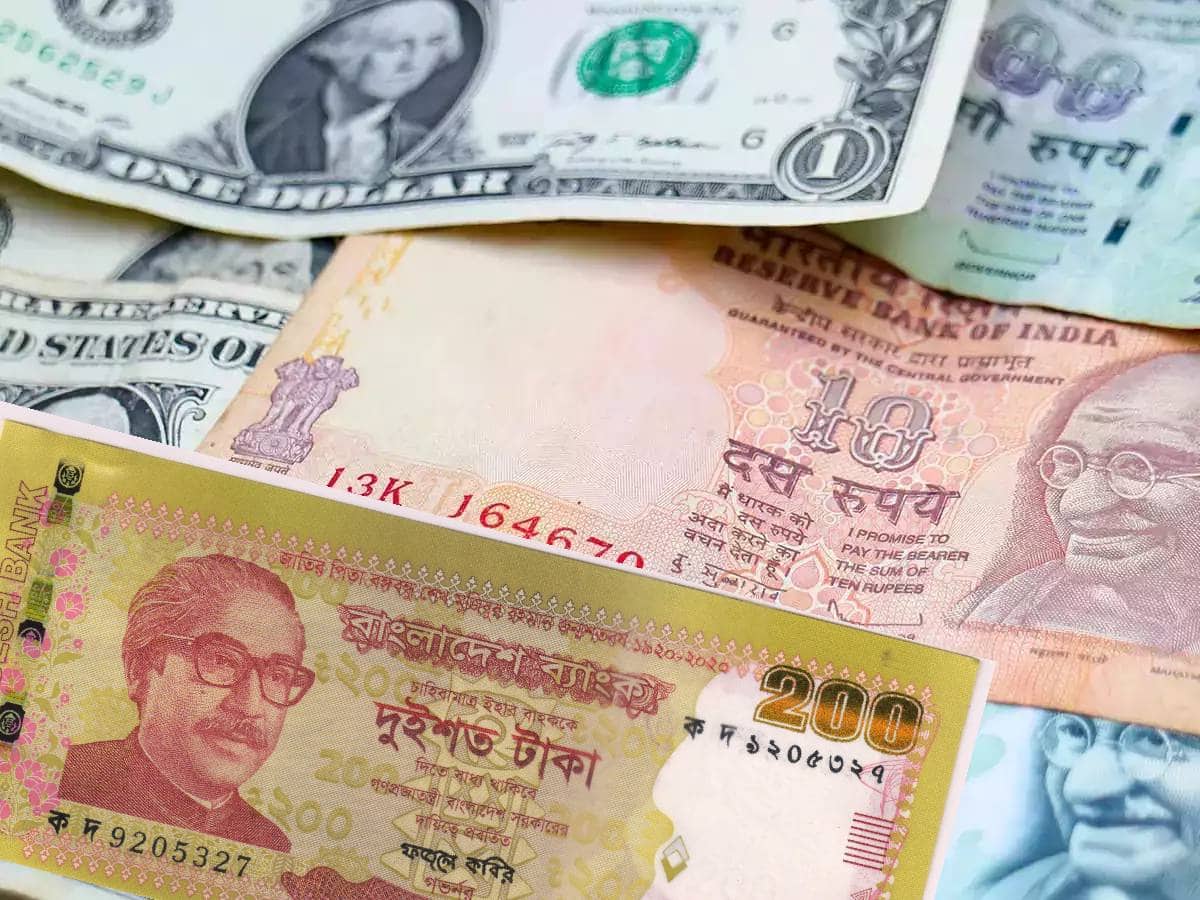
Bangladesh Taka Gains 11.6% Against Indian Rupee in Two Years
A stronger taka against the Indian rupee could lower import and travel costs, though experts say wider economic effects depend on market conditions.